
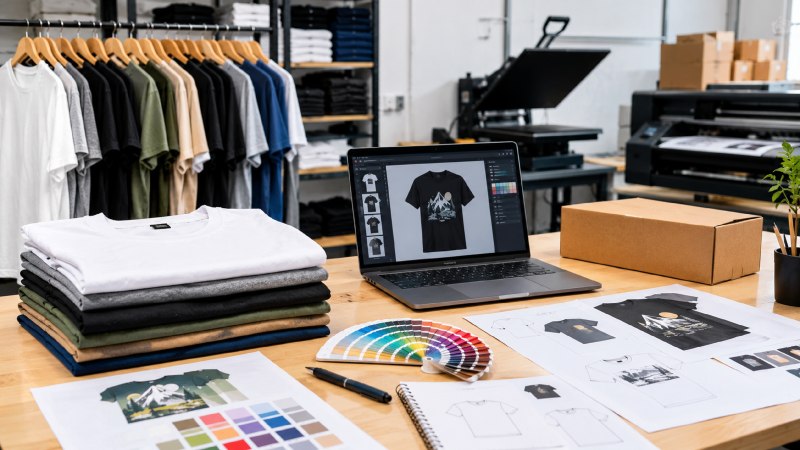
The first questions for each brand’s personal t-shirt project are the same: What will be the design on the personal t-shirt, what kind of cloth should be used, and how many t-shirts will be needed? Buyer and Suppliers communication, fabric weight, printing method, sizing evenness and other details are the few factors that make the difference between a good production and a frustrating one when things go wrong.
When choosing a custom t-shirt supplier, it is mandatory to be well aware of these things before placing bulk orders otherwise you end up by receiving shirts that you didn’t want to.
Quick Answer: What Should You Confirm Before Ordering Custom T-Shirts?
The first step is verification of fabric type, GSM, proper printing or embroidery, measurements and a physical sample before bulk production to get reliable custom t-shirts .Buyers should also ask about the cutting, sewing, printing, embroidery, packaging and quality control stages that are directly managed and how any specialist processes are coordinated.
Why Getting the Basics Right Matters More Than the Design Itself
The basics which must be kept in mind are:
Look at the print size– it will not look good if it is oversized or undersized.
Check print placement– print is in the proper position. This should remain constant throughout the batch.
Check for errors: Suppliers should check the fabric and print before shipping. This can help to prevent errors from occurring.
Don’t just look at the design– a new buyer might only be interested in the artwork. May forget the way the design is going to be made on the shirt.
Consider GSM: The weight of the fabric is important. Light GSM fabric is used in everyday clothes. Heavy GSM fabrics are often used for oversized and streetwear shirts.
Select the appropriate fabric: Depending on the purpose, the shirt’s material should be suitable. The producer can recommend the proper fabric and weight.
Choose an appropriate printing process: Each design requires a different printing process.
This is good for designs with just a few colors. It might also be helpful in larger orders.
DTG printing: DTG is ideal for intricate and photo-like designs. It can also be used for small quantities.
Coloured Designs: DTF is useful for colorful designs. It can also be used for minimal quantities.
Take into account the finished product- depends on the design, fabric, quantity ordered, feel, and durability.
Key Benefits of Working With an Established Supplier
Fabric Selection and Printing Advice: When it comes to choosing the right fabric and printing methods for their designs, an expert supplier can assist them in customizing the GSM and printing techniques based on the specific requirements.
Production control coordination: When the cutting, sewing, decoration, packing and quality checking are recorded in one workflow, it is easier to maintain consistency of measurements and placements.
Reorder turnaround time is quicker with a familiar supplier of the designs, compared to newer suppliers.
Packaging and Private Labeling: Many suppliers provide neck labels as well as hand-tags and branded packaging to assist brands with creating a retailing presence.
Buying Guide: What to Look For
Every supplier does not provide similar reliability, here’s what separates proper custom order from disappointing one.
| Factor | Why It Matters |
| GSM and fabric weight | Confirm the weight matches your intended use case, whether lightweight basics or heavier streetwear |
| Printing method options | Screen printing suits simple designs at volume; DTG handles detailed, multicolor artwork better |
| MOQ per style | Confirm minimums fit your actual order volume, since this varies between ready-made and fully custom styles |
| Sample availability | Request a physical sample before approving full production to catch sizing, color, or placement issues |
| In-house capabilities | Ask which stages, cutting, sewing, printing, QC, happen on-site versus outsourced |
| Private label options | If needed, confirm labels, hangtags, and packaging are available as part of the order |
| Bulk production lead time | Confirm this runs separately from sampling and shipping estimates |
For orders that require multiple sizes or colors, you should make sure to understand how the supplier deals with mixed lots – some MOQs are per size or color variant, not per design.
Common Mistakes to Avoid
Skipping the sample stage. One of the most frequent and costly blunders in sourcing custom apparel is taking on a complete production run without a physical sample.
Choosing GSM without matching the intended use. The fabric that fits a summer outfit might be too light to be used in streetwear or in more expensive branded outfits.
Mismatching printing method to design complexity. A thorough, colorful and clear design printed using a technique appropriate for simple design will be more expensive and less clear.
Underestimating production timelines. Sampling and bulk are on different timelines and it does not make sense to use one estimate for both of them, otherwise you will be losing the launch dates.
Expert Tips
To ensure a good source for printing and color matching, send a vector file of your design if possible, instead of a low resolution image.
Directly inquire with the supplier about the number of years the company has been around, and the in-house production stages they perform. Longer running, vertically integrated suppliers are more likely to pick up problems at an earlier stage in the process.
Don’t take a one-size-fits-all approach by simply requesting a GSM weight; the weight that is appropriate for the product will depend on the fabric’s intended use, and there’s a big difference between commercial fabrics and fabrics for streetwear.
Why Choose Unit Hundred
When choosing a fabric production company for custom t-shirts, many factors matter such as the experience and what does the company offer. Look at how it cut, sew, screenprint, its embroideries, packages products and quality controls in manufacturing plants, measurements accuracy, and decorations.
Printing or embroidery is usually available in ready-made styles that begin at 50 pieces per style, and at 100 pieces per style for fully customized designs. It takes 3-7 working days for the standard samples and 7-20 working days for the bulk production with the approval of the sample. The time can be determined according to the fabric availability and customization level.
FAQs
What’s a typical minimum order quantity for custom t-shirts?
Printing and embroidery are usually from 50 pieces and customized 100 pieces per style.
How do I choose the right GSM for my custom t-shirt?
Depending upon the type of the wear, everyday/routine wear t-shirts use 180-220 GSM whereas streetwear or heavier and oversized t-shirts prefer 240-300 GSM
What’s the difference between screen printing and DTG for custom orders?
For smaller runs and repeated designs screen printing is preferred whereas for larger quantities or intricate multicolour designs DTG or DTF is suitable. Thus it depends on fabric, amount and desired finish.
Should I request a sample before a full production run?
Yes. Taking a pre-production sample is the best method to identify any possible sizing, colour or print placement problems before placing a full order.
How long does a custom t-shirt order typically take?
The standard sample generally will take 3-7 working days and bulk production will generally take 7-20 working days after sample approval, subject to shipping time.
Can custom t-shirt orders include private labels and packaging?
Yes. Neck labels, care labels, hangtags, branded polybags, and custom cartons are among the many items that can be incorporated into the production process by many suppliers.
Do suppliers retain design files for future reorders?
Yes many do, because it will accelerate future orders and ensure the consistency of colours and placement across print runs. Check it with your supplier to be sure.
Conclusion
To sum up, when ordering custom t-shirts from a trustworthy supplier, you should make sure that you are matching the fabric weight, printing process and volume of the order with the actual requirements and check with the supplier before moving forward to bulk printing. It is preferable to review the sample before the order is placed and carry out some discussions about the specifications at the start.