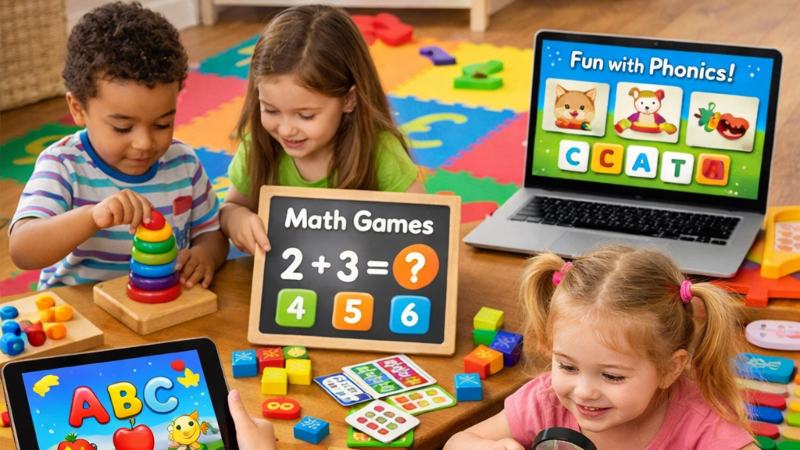
Children learn best when they are engaged, curious, and having fun. Traditional teaching methods are important, but play-based learning has proven to be one of the most powerful tools in child development. That’s where kids’ learning games come in. They combine fun with education, helping children develop cognitive, social, emotional, and physical skills naturally.
In this complete guide, we will explore what learning games are, their benefits, types, age-wise recommendations, how to choose the right games, and tips for parents to make learning enjoyable at home.
What Are Kids’ Learning Games?
Kids’ learning games are structured activities designed to teach children specific skills or concepts while keeping them entertained. These games may focus on:
- Math skills
- Language and reading
- Problem-solving
- Memory improvement
- Creativity
- Social interaction
- Physical coordination
Unlike passive activities, learning games require active participation. This keeps children mentally stimulated and improves their retention of information.
Why Learning Through Play Is Important
Research in child psychology shows that play is essential for healthy development. Educational theories from experts like Jean Piaget and Lev Vygotsky emphasize that children construct knowledge through interaction and experience.
When children play educational games:
- They think critically
- They experiment and explore
- They develop independence
- They improve communication skills
Learning becomes natural instead of forced.
Benefits of Kids Learning Games
- Improves Cognitive Skills
Games that involve puzzles, matching, counting, or memory exercises help improve concentration and logical thinking.
- Boosts Language Development
Word games, storytelling games, and reading apps expand vocabulary and improve pronunciation.
- Encourages Social Skills
Board games and group activities teach children how to take turns, cooperate, and handle winning or losing.
- Enhances Creativity
Drawing games, role-playing activities, and building blocks stimulate imagination.
- Strengthens Motor Skills
Physical games improve coordination, balance, and muscle strength.
Types of Kids Learning Games
There are many types of learning games available today. Parents can choose based on their child’s age and interests.
- Educational Board Games
Board games are excellent for family bonding and skill development.
Popular examples include:
- Scrabble – Improves vocabulary
- Monopoly – Teaches basic money management
- Chess – Develops strategic thinking
Board games also teach patience and planning.
- Digital Learning Games
Technology has introduced interactive learning apps and platforms. When used responsibly, digital games can be educational.
Examples include:
- ABCmouse – Early learning program
- Khan Academy Kids – Free learning app
- Prodigy – Math-based adventure game
Parents should limit screen time and ensure content is age-appropriate.
- Outdoor Learning Games
Outdoor activities improve both physical and mental health.
Examples:
- Scavenger hunts
- Nature exploration
- Alphabet treasure hunt
- Counting games using natural objects
Outdoor learning increases curiosity and observation skills.
-
DIY Home Learning Games
You don’t need expensive materials. Simple home items can create powerful educational experiences.
Ideas:
- Flashcards for vocabulary
- Sorting objects by color or size
- Memory matching with handmade cards
- Story-building using random words
These activities encourage creativity and bonding time.
Age-Wise Guide to Kids’ Learning Games
Choosing age-appropriate games is very important.
Toddlers (2–3 Years)
Focus on:
- Shape sorting
- Color matching
- Simple puzzles
- Musical games
At this stage, children learn basic recognition skills.
Preschoolers (4–5 Years)
Introduce:
- Alphabet games
- Number counting games
- Rhyming activities
- Role-play games
Preschoolers are curious and eager to explore language and numbers.
Early Elementary (6–8 Years)
Choose games that build:
- Reading comprehension
- Basic math skills
- Problem-solving abilities
- Team cooperation
This age group enjoys structured challenges.
Older Kids (9–12 Years)
Focus on:
- Strategy games
- Science experiments
- Coding games
- Advanced math puzzles
Games should stimulate independent thinking.
How to Choose the Right Learning Games
When selecting games, consider:
- Your Child’s Interests
If your child loves animals, choose animal-themed math or reading games.
- Educational Value
Make sure the game teaches a real skill, not just entertainment.
- Age Appropriateness
Check recommended age levels to avoid frustration.
- Screen Time Balance
Balance digital and physical games.
- Safety
Ensure materials are safe and non-toxic for younger children.
Creating a Learning Game Routine at Home
Consistency improves results. Here’s how parents can create a simple routine:
- Set aside 30–45 minutes daily
- Mix educational and fun activities
- Play together as a family
- Encourage discussion after the game
For example, after a board game, ask:
- What did you learn?
- What strategy worked best?
This reflection strengthens understanding.
The Role of Parents in Learning Games
Parents play a major role in maximizing the benefits of kids’ learning games. Your involvement:
- Builds confidence
- Encourages participation
- Strengthens emotional connection
- Motivates children
Instead of correcting mistakes immediately, guide children gently. Praise effort, not just results.
Common Mistakes to Avoid
-
Forcing the Game
If your child is tired or uninterested, forcing the activity can create negativity toward learning.
-
Too Much Screen Time
Digital games should not replace physical play or social interaction.
-
Choosing Games Too Advanced
Overly difficult games may reduce confidence.
-
Ignoring Fun
If the activity is not enjoyable, it loses its purpose.
How Learning Games Support Academic Success
Children who engage regularly in educational games often show:
- Better memory retention
- Improved problem-solving skills
- Higher classroom participation
- Stronger communication abilities
Because games make learning active, children understand concepts more deeply.
Encouraging Independent Learning
As children grow, encourage them to:
- Create their own games
- Teach younger siblings
- Set learning goals
- Track their progress
This builds responsibility and leadership skills.
Balancing Fun and Education
The best learning happens when children don’t even realize they are studying. That’s the power of well-designed kids’ learning games. They reduce academic pressure while increasing curiosity.
Parents should aim for balance:
- 50% skill-building
- 50% enjoyment
When fun and learning go together, children develop a lifelong love for education.
Final Thoughts
In today’s fast-changing world, children need more than textbook knowledge. They need creativity, critical thinking, communication, and emotional intelligence. Learning games provide all these skills naturally and enjoyably.
Kids’ learning games are not just time-pass activities. They are powerful tools that shape your child’s intellectual and emotional growth. Whether through board games, digital apps, outdoor exploration, or simple DIY activities at home, every playful moment can become a learning opportunity.
By choosing age-appropriate games, maintaining balance, and actively participating, parents can turn everyday play into meaningful development. Start small, stay consistent, and most importantly, make learning joyful.